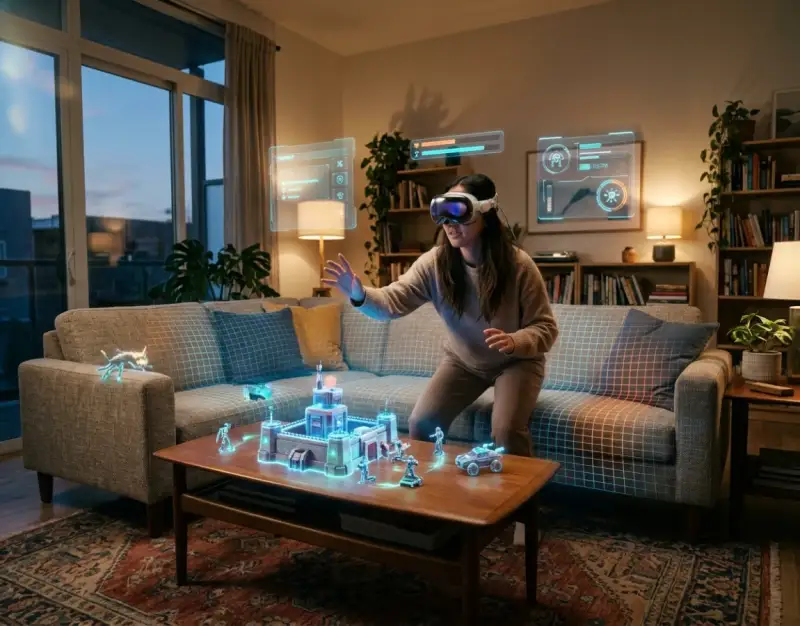
Imagine walking into your residence after a grueling twelve-hour workday. Your hallway lighting dims to a welcoming amber, your climate control system balances the ambient temperature to your exact metabolic preference, and an autonomous floor-care robot glides silently back to its charging dock after finishing a deep scrub of your hardwood floors. In theory, this choreography is the benchmark of modern domestic automation. Yet, anyone who has ever wrestled with incompatible proprietary apps, uncoordinated scheduling conflicts, or a robotic vacuum that stubbornly refuses to recognize a smart air purifier knows that the contemporary reality is far more fractured.
For decades, consumers and tech enthusiasts have been promised a unified future where autonomous gadgets work in unprompted harmony. Today, the market is flooded with sophisticated machine-learning vacuums, window-cleaning drones, kitchen assistant companions, and security sentinels. However, bringing these devices together into a cohesive smart home ecosystem remains an uphill battle. The friction points are rarely hardware failures; rather, they stem from siloed communication protocols, proprietary data schemas, and the persistent lack of universal robot interoperability across competing manufacturers who view their closed ecosystems as competitive moats.
This deep-dive investigation examines whether consumer companion robots and autonomous gadgets finally communicate seamlessly, exploring the underlying architectural hurdles, emerging communication standards like Matter, and the roadmap required to achieve true domestic orchestration. As we evaluate the state of IoT robotics, we will dissect how cross-device latency, local edge processing, and multi-agent coordination dictate whether your smart home functions as a synchronized symphony or a chaotic cacophony of competing appliances.
Deconstructing the Mechanics of Autonomous Gadget Ecosystems
To understand why domestic robots frequently struggle to converse with one another, we must first examine the foundational architecture of the modern Internet of Things (IoT). Historically, smart home devices were built as isolated islands. A smart bulb talked to its specific bridge via Zigbee or proprietary RF; a security camera streamed video to a cloud server via Wi-Fi; and an autonomous vacuum mapped its environment using onboard LiDAR, storing its telemetry in a manufacturer-locked cloud database. These systems lacked a common semantic language.
The core challenge of robot interoperability lies in translating disparate data streams into actionable intelligence. When a robot vacuum detects an obstruction, such as a spilled liquid, that data is valuable not just to the vacuum's cleaning algorithm, but to the home's moisture sensors, automated mops, and smart lighting systems. However, because each device utilizes distinct API wrappers and cloud-dependent execution loops, real-time cross-talk is often bottlenecked by cloud latency and authorization barriers. If the internet drops, the entire ecosystem fractures, turning autonomous agents into stranded, disconnected nodes.
Furthermore, the physical nature of consumer companion robots introduces spatial awareness complexities that stationary sensors do not face. Mobile robots dynamically update their maps of the physical home environment. For an autonomous gadget ecosystem to function efficiently, this spatial mapping data must be shared securely and instantly with other devices. If a security rover maps a newly relocated piece of furniture, stationary smart appliances and automated pet feeders need access to those updated coordinates to adjust their own operational routines without requiring manual recalibration by the user.
The Evolution of Communication Protocols and Universal Standards
For years, manufacturers attempted to solve interoperability through brute-force cloud integration, routing local commands through remote servers located thousands of miles away. This approach introduced unacceptable latency and privacy vulnerabilities. The introduction of local-first communication protocols marks a paradigm shift in how autonomous gadgets interact within a smart home ecosystem. Protocols such as Thread and the overarching Matter standard have fundamentally altered the landscape by prioritizing local mesh networking and device-to-device trust.
Thread creates a low-power, self-healing IPv6-based mesh network specifically designed for smart homes. Unlike traditional Wi-Fi, which can become congested as the number of connected autonomous gadgets increases, Thread devices route data directly to one another without relying on a central router for every single packet. This local routing is essential for robots that require instantaneous feedback loops. When an autonomous security bot spots an intruder, it cannot afford to wait for a round-trip packet confirmation from a remote cloud server before triggering smart locks or floodlights.
Despite these hardware-layer advances, software-layer fragmentation remains a formidable hurdle. Matter provides a common application layer, ensuring that devices from Apple, Google, Amazon, and Samsung can speak the same semantic language. Yet, current Matter specifications are heavily optimized for static fixtures like switches, lights, and thermostats. Complex consumer companion robots—with their dynamic navigation nodes, multi-modal sensor arrays, and variable telemetry—push the boundaries of these standardized data models, requiring custom capability mappings that manufacturers are often slow to implement.
Designing a Unified Smart Home: Step-by-Step Integration Methodologies
Achieving a seamless autonomous gadget ecosystem out of the box is currently impossible, meaning tech-forward homeowners must adopt deliberate, strategic integration methodologies. Moving past the marketing hype requires building a robust, protocol-agnostic local automation backbone that bridges disparate manufacturer ecosystems.
Step 1: Establishing a Local-First Hub and Protocol Bridge Architecture
The foundation of any responsive robot ecosystem is a local orchestration hub running platforms like Home Assistant, openHAB, or commercial hubs with deep local API support. Avoid relying entirely on manufacturer-specific applications, as they enforce cloud silos. Configure your hub to act as the single source of truth, routing commands locally over Zigbee, Z-Wave, Thread, and local LAN integrations rather than external cloud APIs.
When selecting autonomous gadgets, prioritize devices that offer local API access, MQTT support, or official integrations with open-source automation platforms. Devices that require constant cloud connectivity introduce single points of failure that will inevitably break your automation routines when internet service fluctuates.
Step 2: Implementing Spatial Awareness and Boundary Sharing
Autonomous floor-care robots and security rovers require precise spatial data to navigate effectively. To prevent your various cleaning and monitoring units from conflicting, you must map your home uniformly. Where possible, sync exclusion zones and virtual boundaries across platforms so that a newly introduced robot vacuum respects the same no-go zones as your indoor drone or autonomous pet companion.
Expert insider tip: Utilize a dedicated IoT VLAN (Virtual Local Area Network) on your router to isolate autonomous gadgets from your primary workstation and personal devices. This safeguards your network against potential firmware vulnerabilities while ensuring uninterrupted local multicast traffic for rapid robot-to-hub communication.
Step 3: Orchestrating Event-Driven Automation Triggers
Move away from rigid time-based schedules and transition toward event-driven automation logic. For example, program your smart home to trigger your autonomous security drone only when perimeter door sensors register a breach while the primary resident's smartphone GPS indicates they are away. Concurrently, command the robot vacuum to dock and pause its cleaning cycle so its acoustic footprint does not interfere with the security drone's audio sensors.
Similarly, synchronize charging schedules across power-hungry autonomous devices to prevent electrical load spikes on your home grid. Staggering the charging cycles of high-draw companion robots ensures your smart energy management system can balance solar storage and grid draw efficiently without tripping breakers.
Real-World Case Studies: Synchronization Successes vs. Integration Nightmares
To evaluate how these theoretical frameworks perform in the wild, let us examine two contrasting case studies of smart home deployments involving multiple autonomous gadgets.
Case Study A (The Synchronized Homestead): A technology executive in Seattle deployed a local-first smart home centered around an open-source hub, integrating two autonomous floor scrubbers, an indoor security rover, smart motorized window blinds, and environmental sensors. By utilizing MQTT and local API integrations, the user configured the security rover to patrol only when all residents left the premises, automatically signaling the window blinds to tilt shut for enhanced privacy. When the cleaning robots detected a drop in indoor air quality—monitored via decentralized particulate sensors—they adjusted their cleaning intensity to minimize dust dispersal. Result: Zero cloud latency, high reliability, and seamless multi-robot orchestration.
Case Study B (The Cloud-Siloed Catastrophe): A suburban family purchased five different consumer companion robots from five different market-leading brands, each relying exclusively on its own proprietary cloud app. Because the devices could not communicate locally, the security robot frequently collided with the scheduled path of the autonomous lawn-and-pool maintenance trackers (indoors/outdoors overlap), while the kitchen assistant robot repeatedly triggered false alarms on the security system because their geofencing APIs failed to sync. When the local internet service provider suffered a twelve-hour outage, the entire ecosystem paralyzed, trapping smart locks and rendering manual overrides cumbersome. Result: Frustration, frequent device disconnections, and abandoned automations.
These divergent outcomes underscore a vital truth: seamless communication between autonomous gadgets is not a feature you buy off the shelf; it is an architectural achievement engineered through deliberate protocol selection and local-first system design.
Critical Mistakes to Avoid When Building Your Autonomous Ecosystem
Building a multi-robot smart home is fraught with hidden engineering traps. Avoiding these five critical mistakes will save you countless hours of troubleshooting and prevent premature hardware obsolescence.
- Relying Exclusively on Cloud-Dependent Integrations: Routing every device command through third-party cloud servers introduces fatal latency and renders your home vulnerable to internet outages and corporate server sunsets. Always prioritize local control protocols.
- Ignoring Wi-Fi Bandwidth and Channel Congestion: Piling dozens of autonomous gadgets onto a single residential Wi-Fi router causes packet loss and delayed response times. Invest in a tri-band mesh Wi-Fi system and segment your IoT devices onto a dedicated VLAN.
- Neglecting Firmware Security and Update Management: Autonomous mobile robots possess cameras, microphones, and spatial LiDAR maps of your private interior spaces. Failing to isolate them on a secure network or ignoring security patches exposes your household to remote surveillance exploits.
- Assuming Universal Compatibility Out-of-the-Box: Never assume that two devices bearing smart home certification badges will naturally exchange telemetry data. Always verify community-tested integration pathways before investing in niche consumer companion robots.
- Overlooking Power and Charging Infrastructure Constraints: Autonomous gadgets require substantial standby power and strategic docking locations. Failing to map out adequate electrical outlets and clearance space for docking bays often leads to cluttered hallways and dead batteries.
Comparative Analysis of Smart Home Communication Approaches
To help you navigate the architectural choices for your autonomous ecosystem, the following matrix compares the leading communication paradigms currently dominating the consumer robotics market.
| Communication Paradigm | Latency & Speed | Reliability (Offline) | Interoperability Level | Security Risk Profile |
|---|---|---|---|---|
| Proprietary Cloud APIs | High (500ms - 2000ms+) | None (Fails completely) | Low (Siloed by brand) | Moderate-High (External servers) |
| Matter (IP over Wi-Fi/Thread) | Low (10ms - 50ms) | High (Local execution) | High (Cross-brand standard) | Low (End-to-end encryption) |
| Local-First Mesh (Zigbee/Z-Wave) | Very Low (5ms - 20ms) | High (Local hub control) | Moderate-High (Hub dependent) | Low (Isolated local network) |
| Custom MQTT Bridges | Ultra-Low (< 10ms) | Maximum (Pure local LAN) | Customizable (Requires setup) | Low (Self-managed boundaries) |
Frequently Asked Questions About Autonomous Gadgets
Do consumer companion robots currently use Matter to communicate?
While the Matter standard has rapidly expanded to support lighting, climate control, security sensors, and smart plugs, its adoption for complex consumer companion robots is still in its infancy. Because mobile robots require advanced spatial data mapping, streaming video feeds, and complex trajectory calculations, standard Matter device types are often insufficient. Most advanced robots still rely on manufacturer-specific local APIs or custom home automation integrations (such as Home Assistant custom components) to achieve deep ecosystem synchronization.
How can I prevent my autonomous gadgets from spying on my home?
Privacy is a legitimate concern with devices that actively map your living space and capture visual or acoustic data. To secure your autonomous gadgets, always isolate them on a dedicated IoT VLAN with restricted WAN (Wide Area Network) access. Disable unnecessary cloud telemetry and telemetry sharing in the device settings. Whenever possible, choose devices that support local processing and local storage rather than uploading video and map data to third-party cloud servers.
What is the difference between a smart home hub and a robot coordination bridge?
A standard smart home hub (such as Apple HomeKit, Google Home, or Amazon Alexa) manages static fixtures like switches, thermostats, and lights using standardized command sets. A robot coordination bridge or advanced automation server (like Home Assistant) handles complex state machines, dynamic spatial telemetry, and event-driven logic required by mobile autonomous gadgets. For a truly seamless ecosystem, hobbyists often use a local automation server to bridge the gap between disparate robotic brands that standard consumer apps cannot reconcile.
Will my autonomous vacuum cleaner ever talk directly to my smart air purifier?
Direct device-to-device communication without human or central hub intervention is becoming increasingly viable through Thread and local IP networking. For example, when an autonomous floor scrubber detects high particulate dust levels during its cleaning run, it can broadcast a localized multicast message instructing nearby smart air purifiers to elevate their fan speeds. While this level of direct communication is currently supported in advanced enthusiast setups, it is not yet standardized across all commercial consumer appliances.
Why do smart home robots lose connection so frequently?
Frequent disconnections are typically caused by network congestion on residential Wi-Fi routers, weak signal strength in remote corners of the home, or aggressive power-saving sleep modes built into the robot's firmware. Autonomous gadgets often transition between access points poorly as they roam your home. Implementing a multi-ap mesh Wi-Fi system with dedicated backhaul channels and assigning static IP addresses to your robotic units can dramatically improve connection stability.
Strategic Roadmap & Final Takeaway
The quest for seamless communication across autonomous gadget ecosystems is an ongoing evolution rather than a finished destination. While universal standards like Matter and robust local protocols like Thread have laid the groundwork for better interoperability, consumer companion robots remain complex, dynamic agents that push the limits of traditional smart home architecture. Manufacturers are slowly realizing that closed ecosystems ultimately frustrate consumers, paving the way for more open, API-friendly device designs.
For tech enthusiasts and smart home architects, the path forward is clear: abandon the illusion of out-of-the-box plug-and-play harmony among competing brands. Instead, embrace a local-first integration strategy utilizing open automation platforms, robust network segmentation, and event-driven logic. By taking control of your home's communication backbone today, you can transform a disparate collection of isolated gadgets into a unified, intelligent, and responsive autonomous ecosystem that truly works for you.
Be the first to share a gentle reflection on this story.